
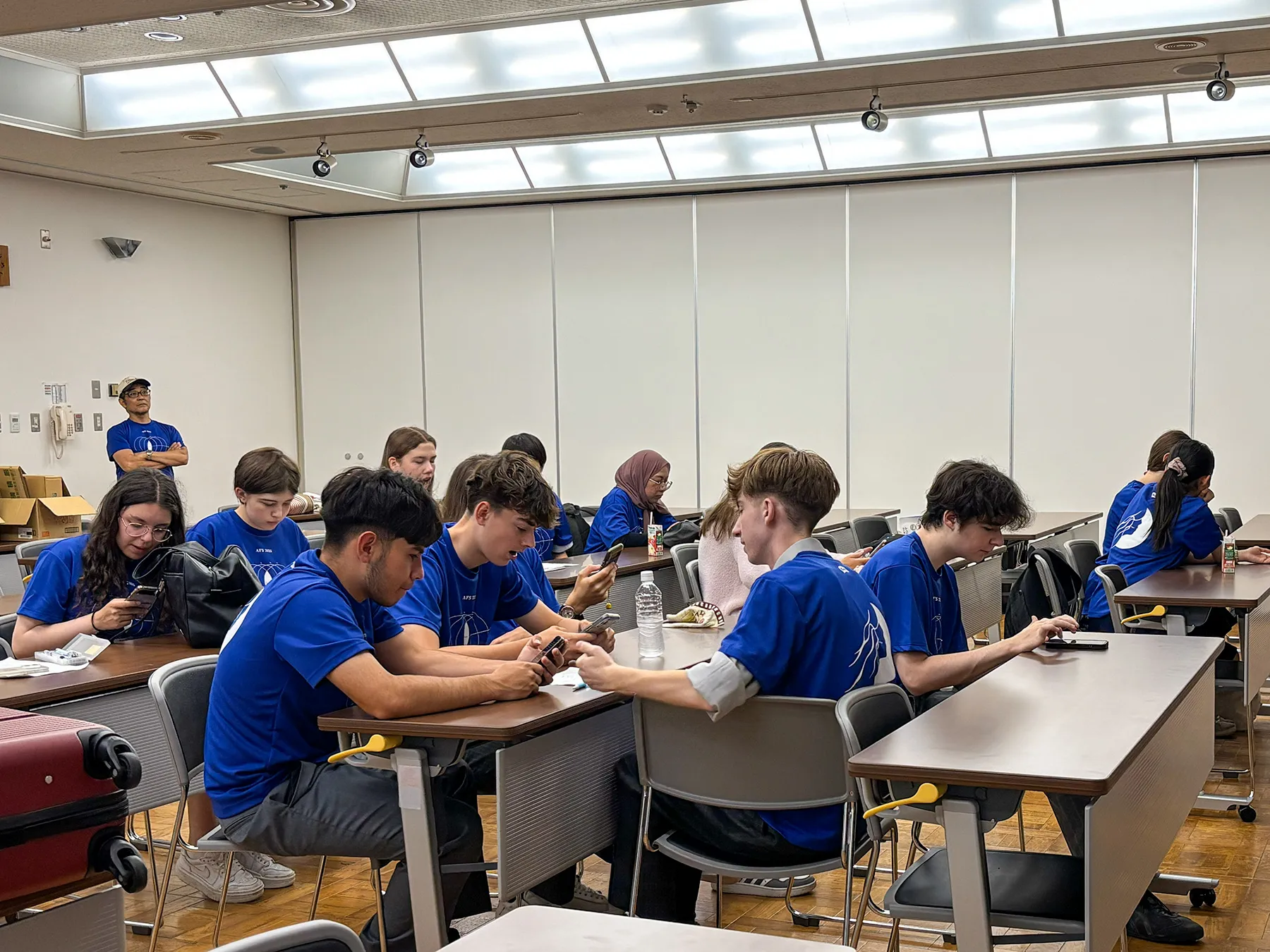
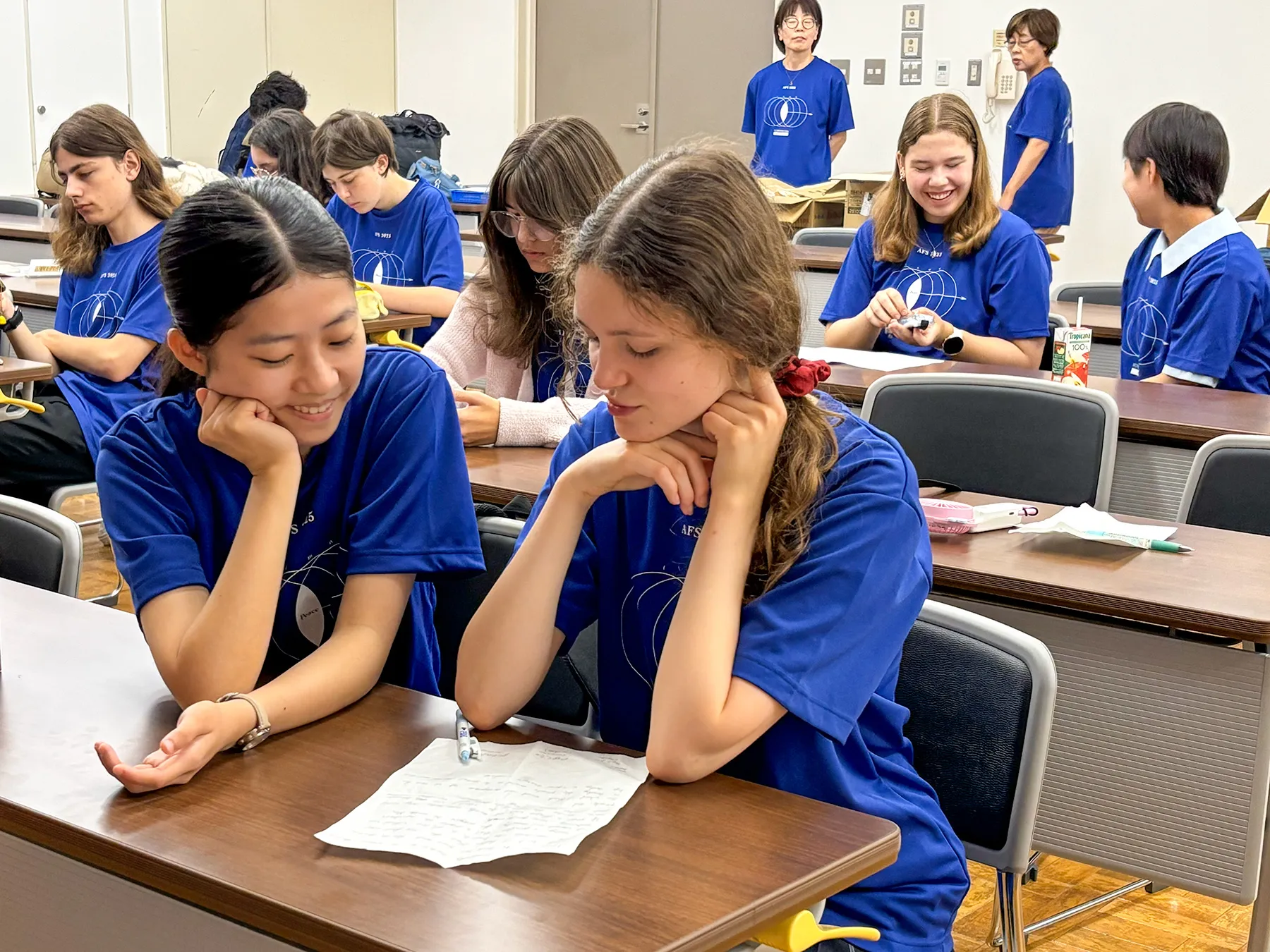
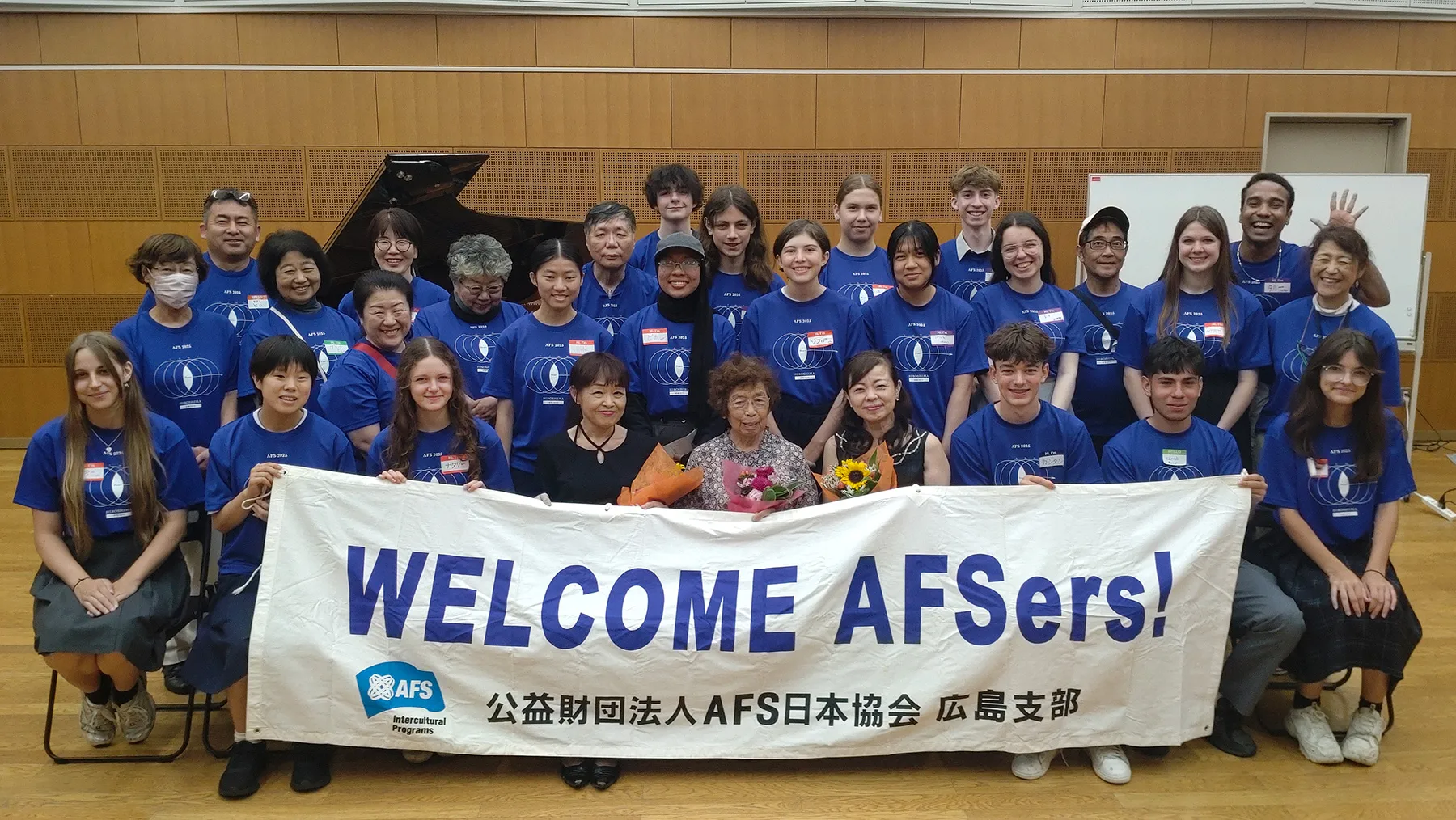
2025年8月1日から3日まで、AFS中国四国地域「HIROSHIMA平和学習2025」実行委員会主催の平和学習に参加しました。
私はスタッフとして参加し、3日間のプログラムで通訳と一部の司会進行を担当しました。世界10カ国以上から集まったAFS留学生、日本の派遣生、そしてスタッフの仲間たちと共に、広島の地で「平和とは何か」「自分には何ができるのか」を深く考える時間となりました。
1日目:声と音楽で伝わる被爆体験
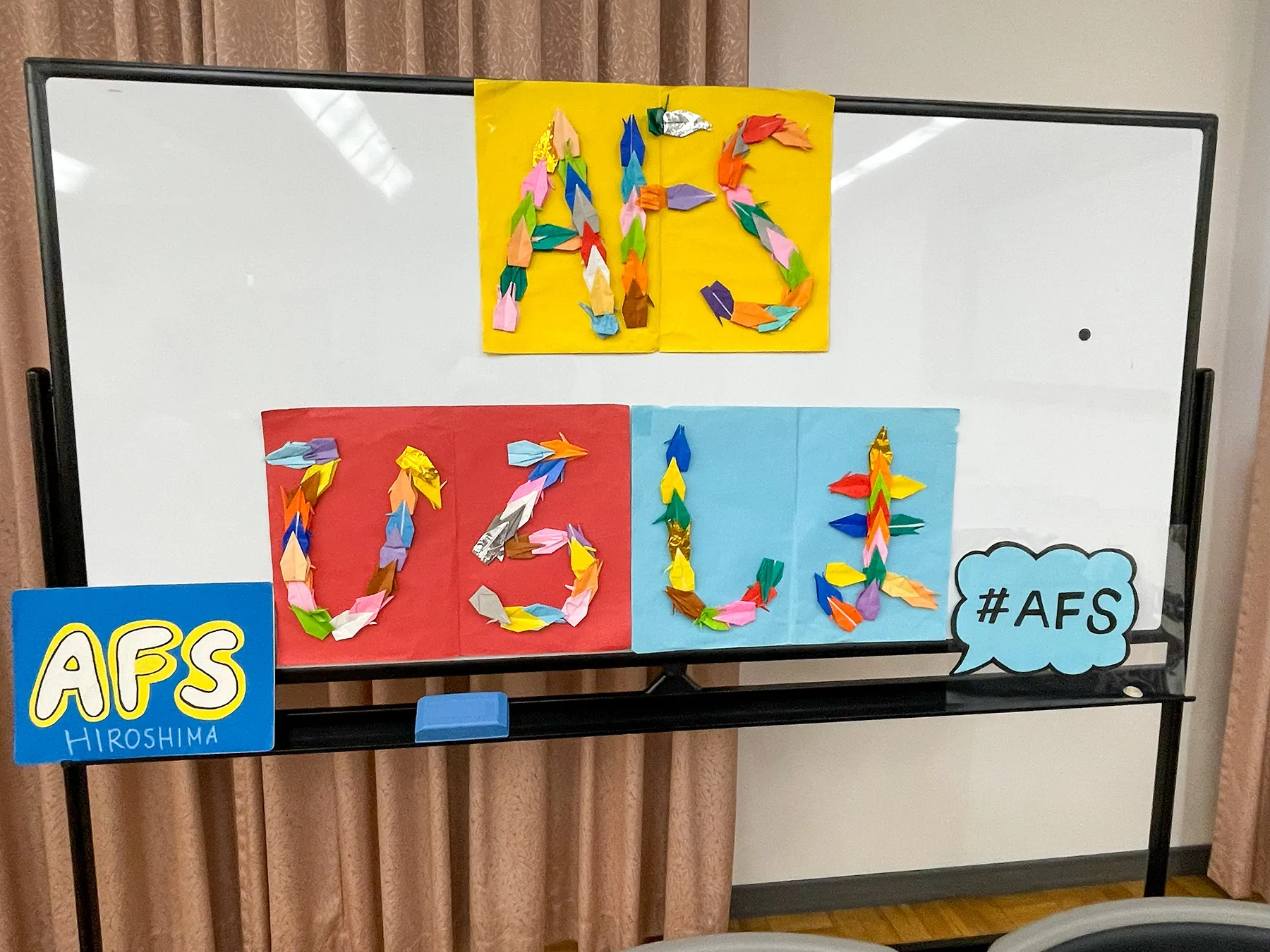
初日、アステールプラザに集合した私たちは、まず折り鶴作りから始めました。
小さな折り紙に込めた祈りは、それぞれの国や地域へ持ち帰られ、また新たな平和の輪を広げていくことでしょう。
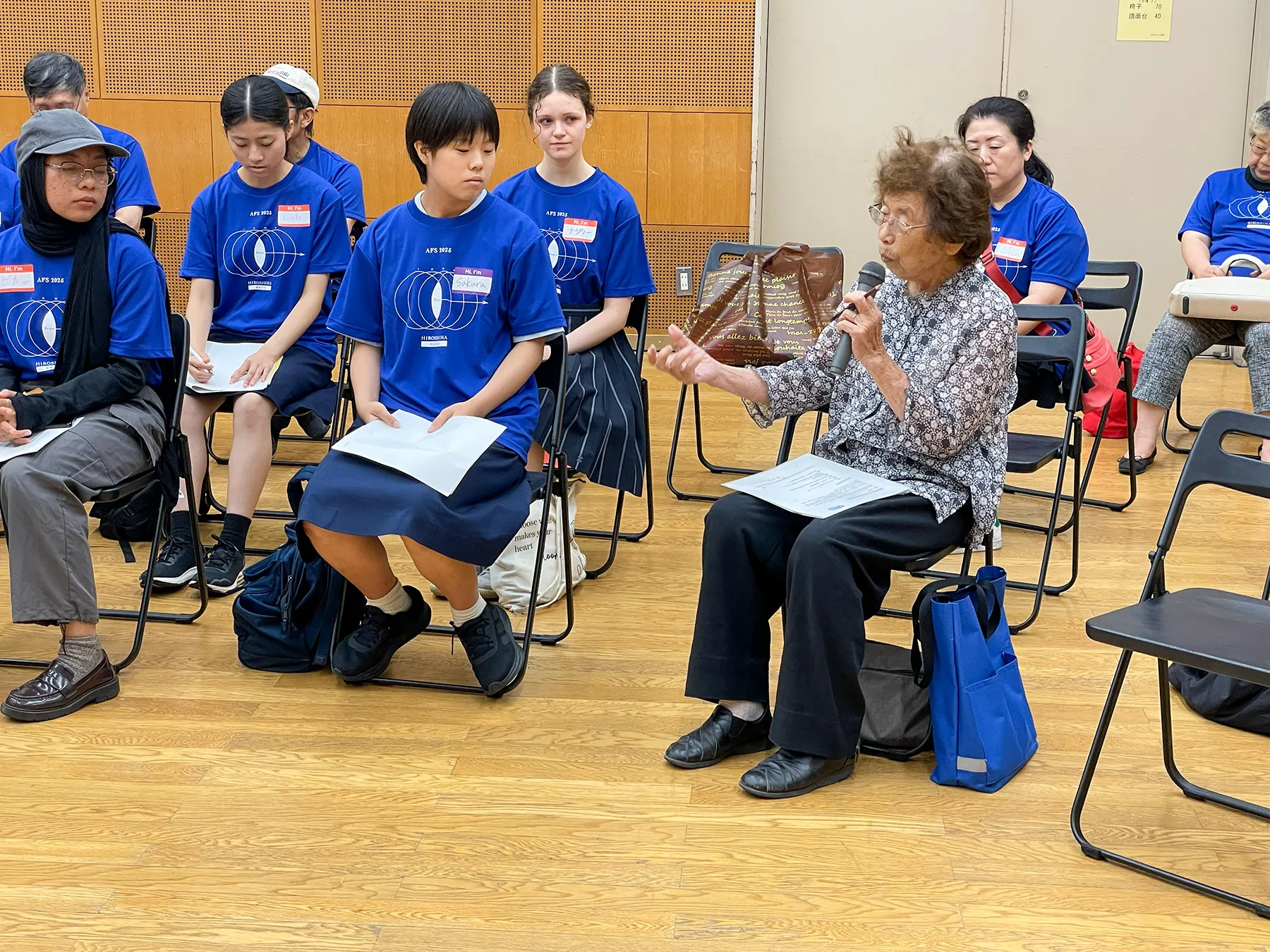
そして、被爆者の笠岡貞江さんのお話。
笠岡さんは12歳のとき、爆心地から3.5kmの江波町の自宅で被爆されました。ご家族や友人を失った体験を92歳の今も鮮明に語り続けています。
朗読家・桂幾子さんの静かな声と、ピアニスト・森岡美和子さんの演奏に包まれながら語られるその証言は、言葉を超えて私たちの胸に響きました。
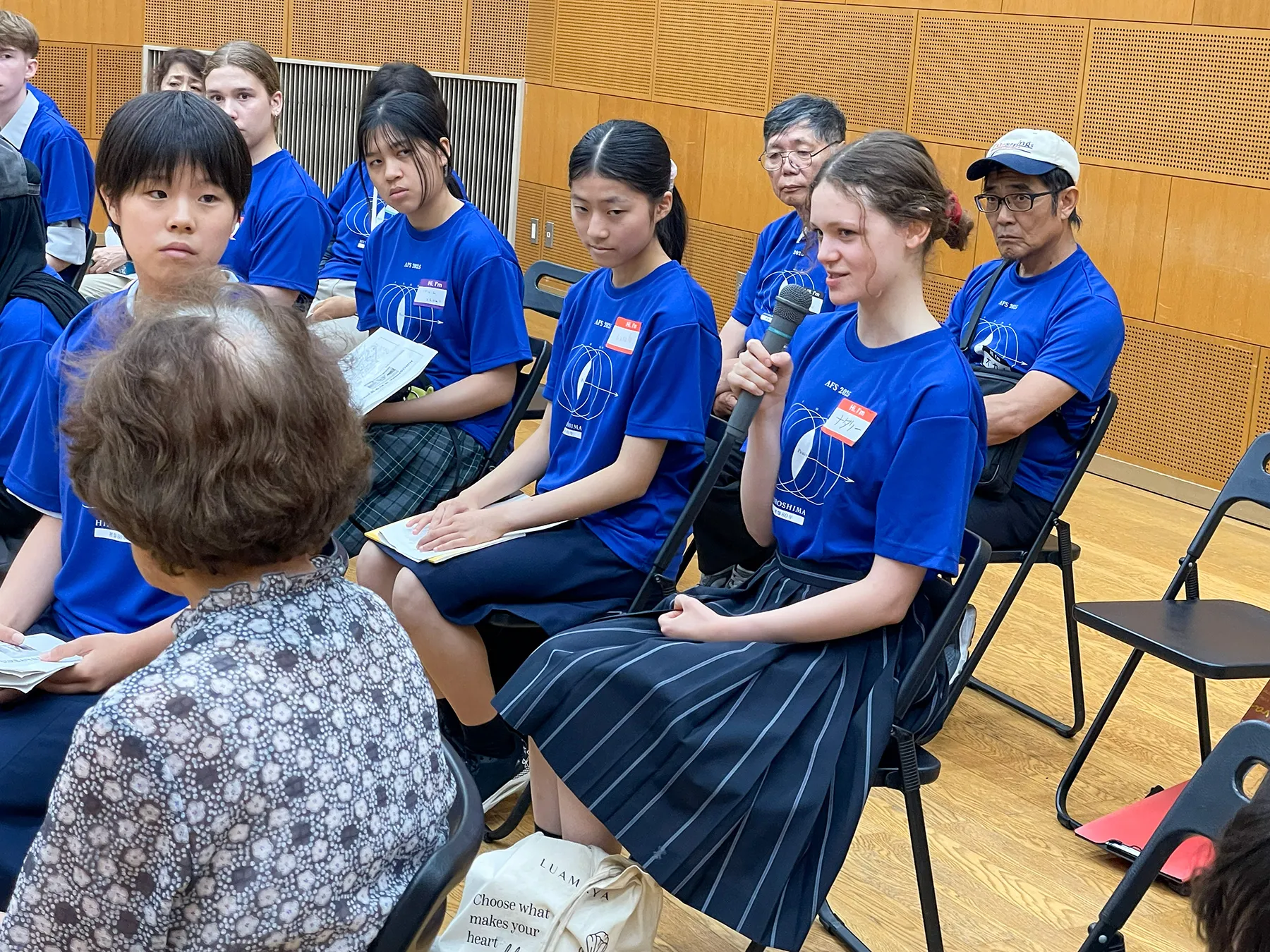
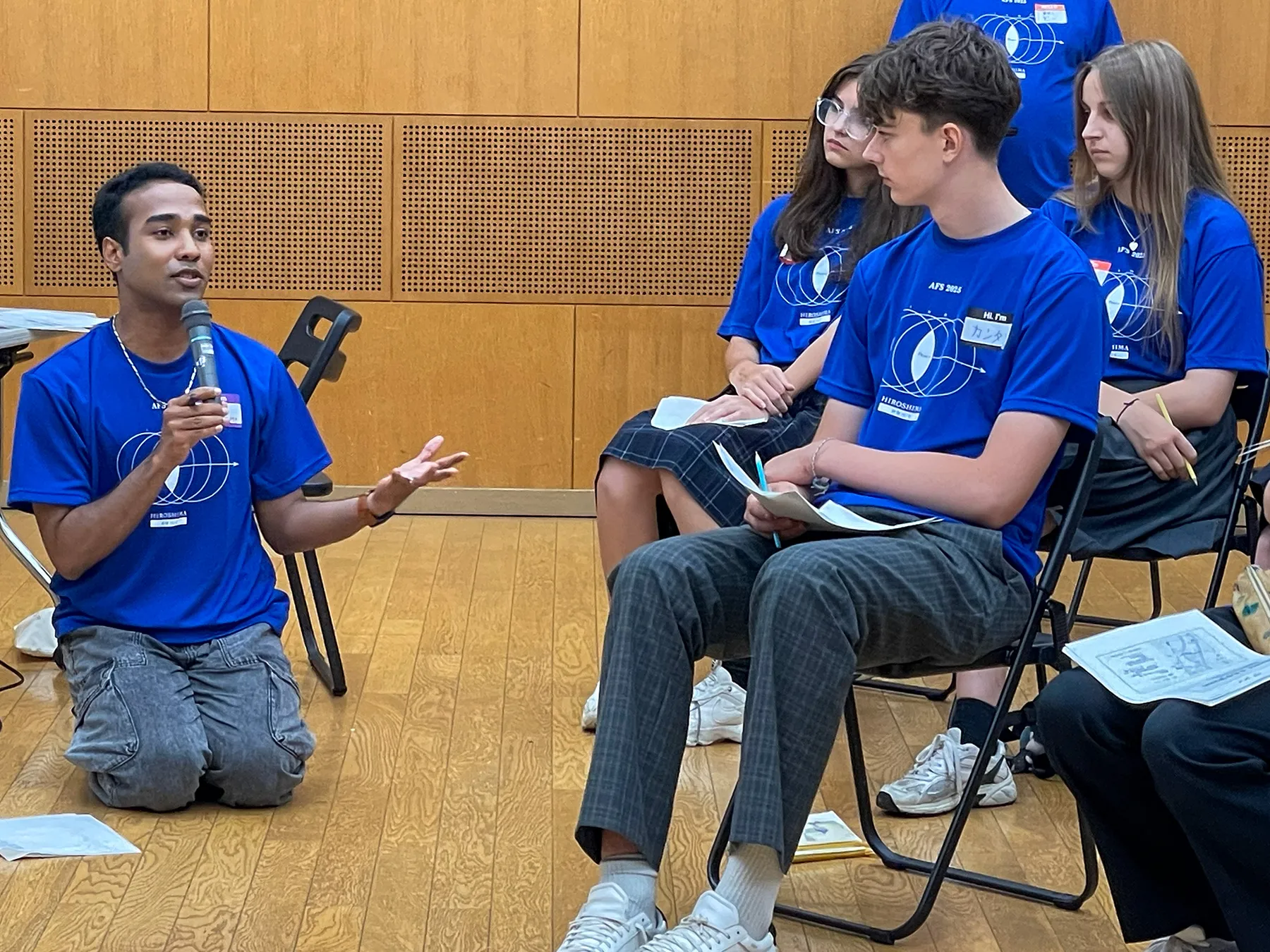
通訳としてその言葉を外国の参加者に伝える中で、ただ翻訳する以上の責任を感じました。言葉の背景にある感情や、空気までも届けたい──そんな想いでマイクを握りました。
基町高校との交流:絵が語る、あの日の記憶
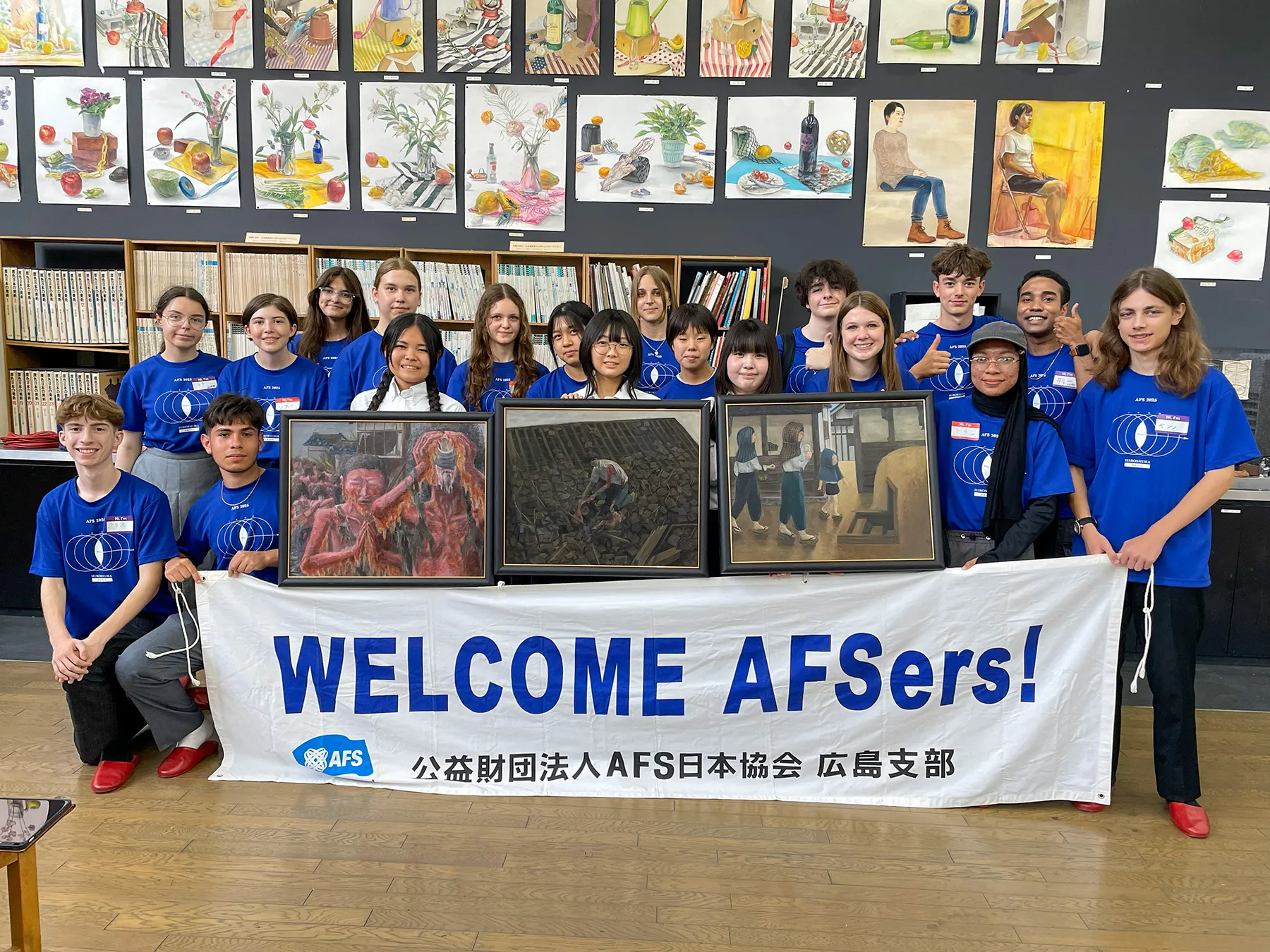
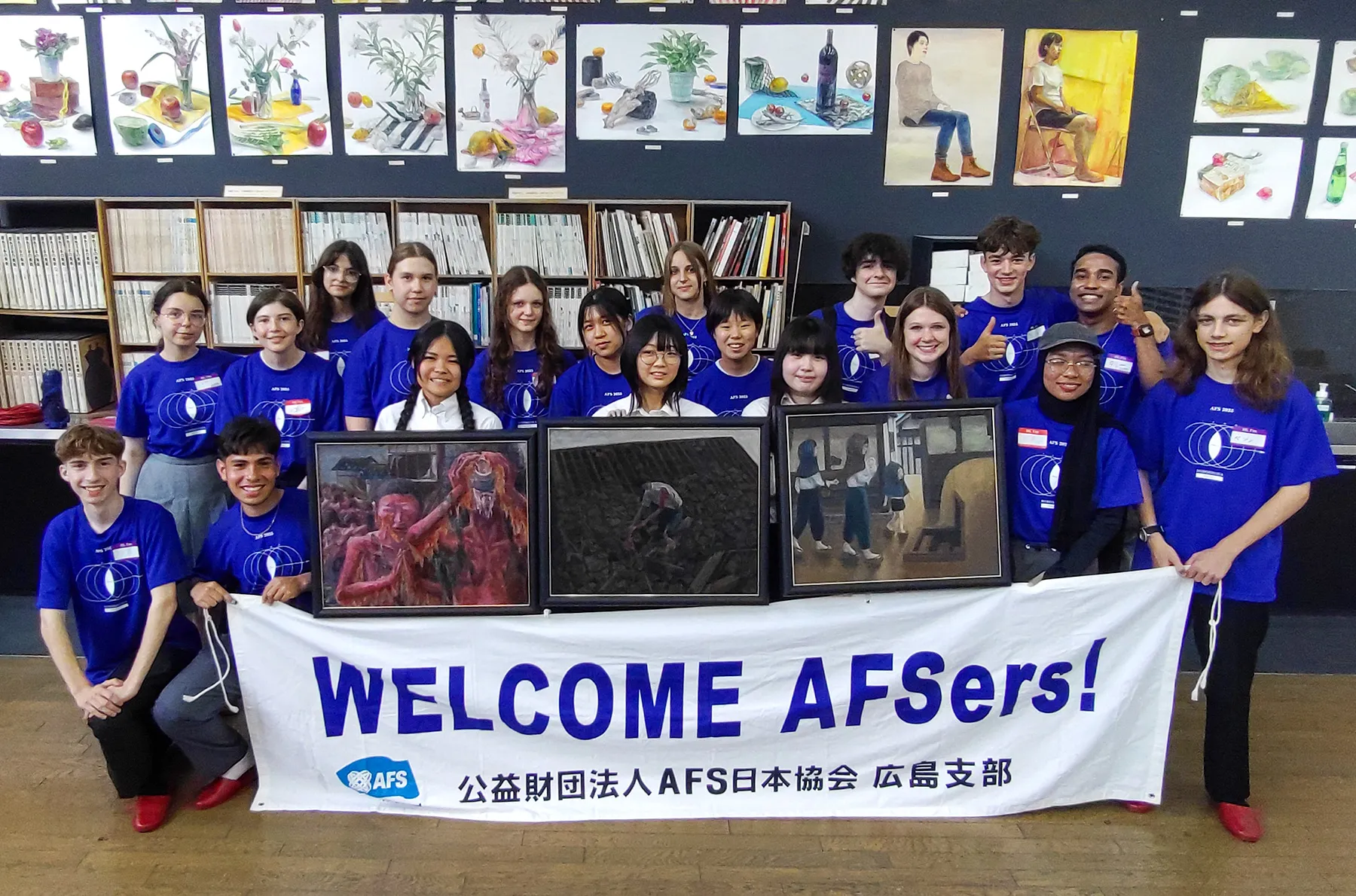
夕方は、基町高校を訪問。生徒たちが描いた「被爆絵画」を鑑賞しました。
絵の中には、炎に包まれた街や助けを求める人々の姿が生々しく描かれています。現代の高校生が描いたとは思えないその迫力に、私自身も言葉を失いました。
交流の時間では、日本語と英語を交えながら感想や質問が飛び交い、世代も国籍も越えたつながりが生まれました。
2日目:平和記念公園と資料館での学び
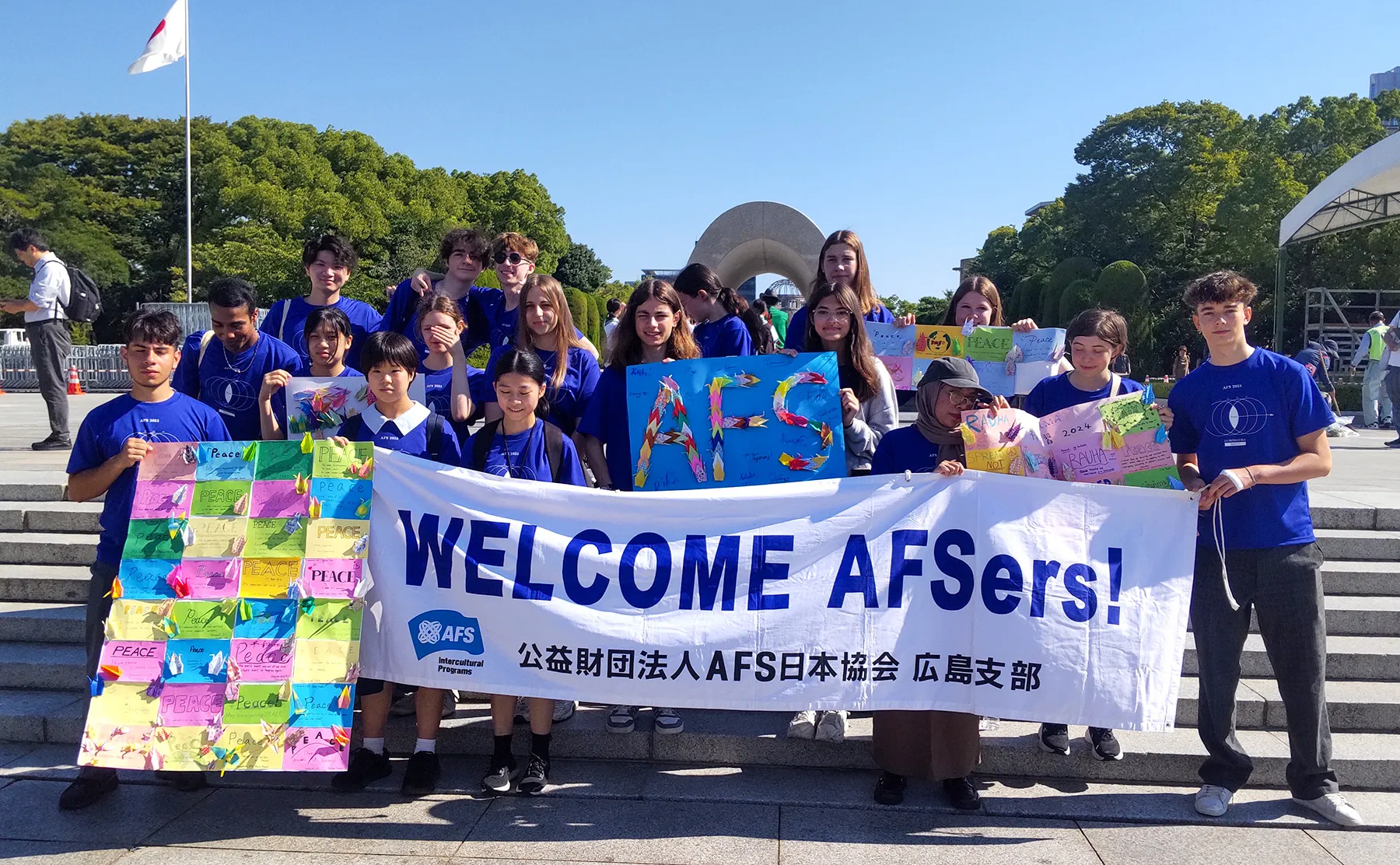
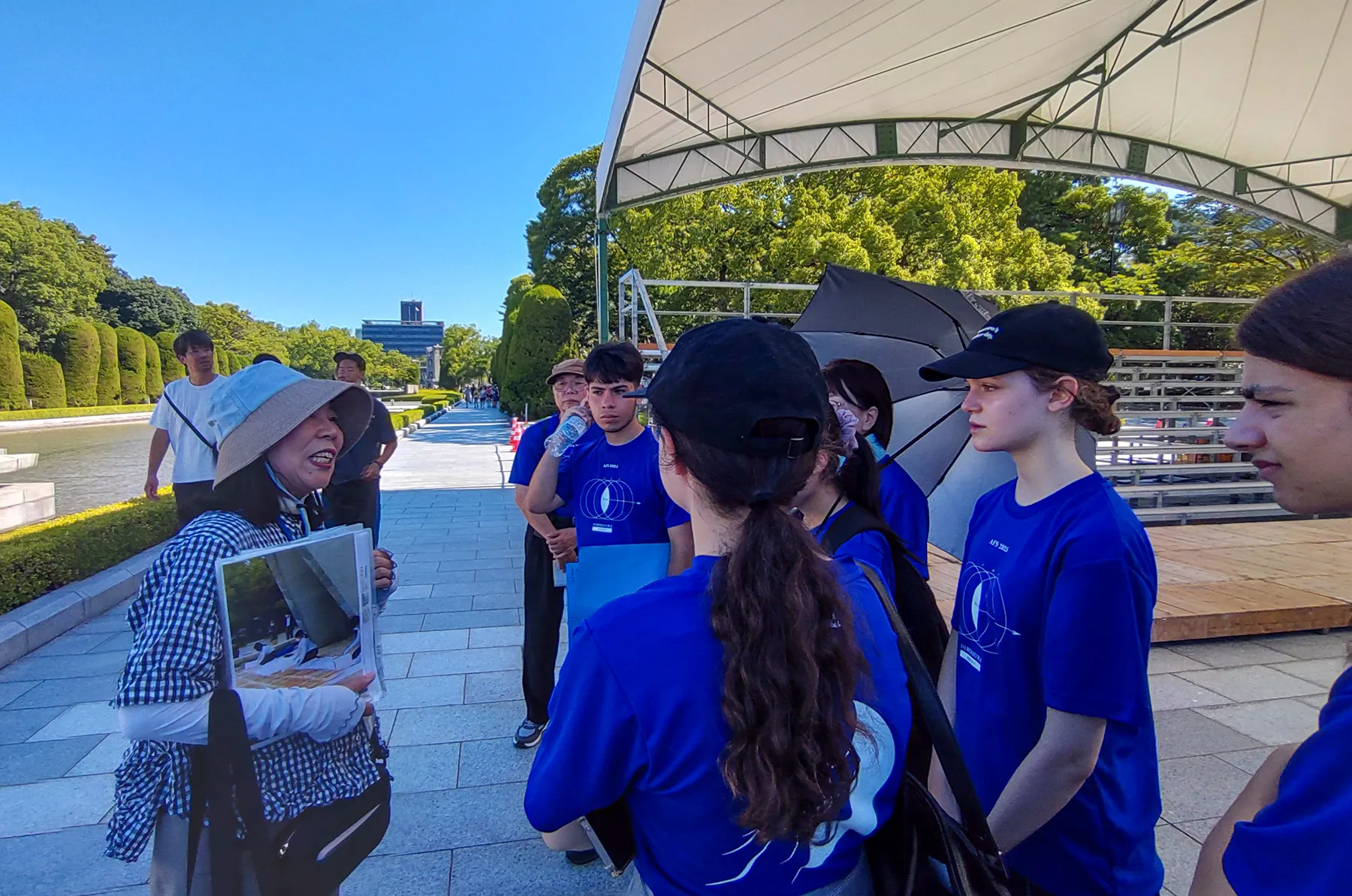
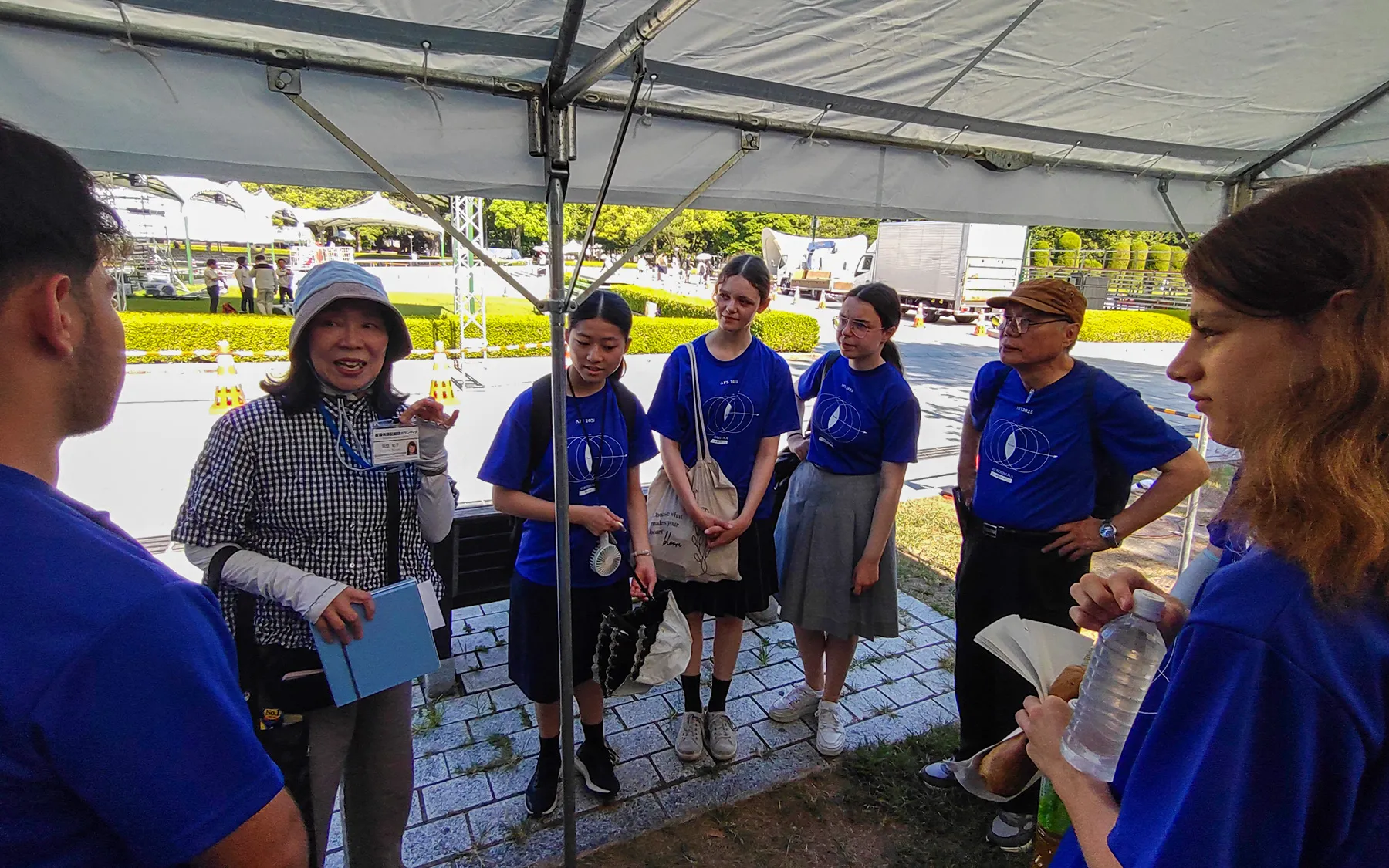
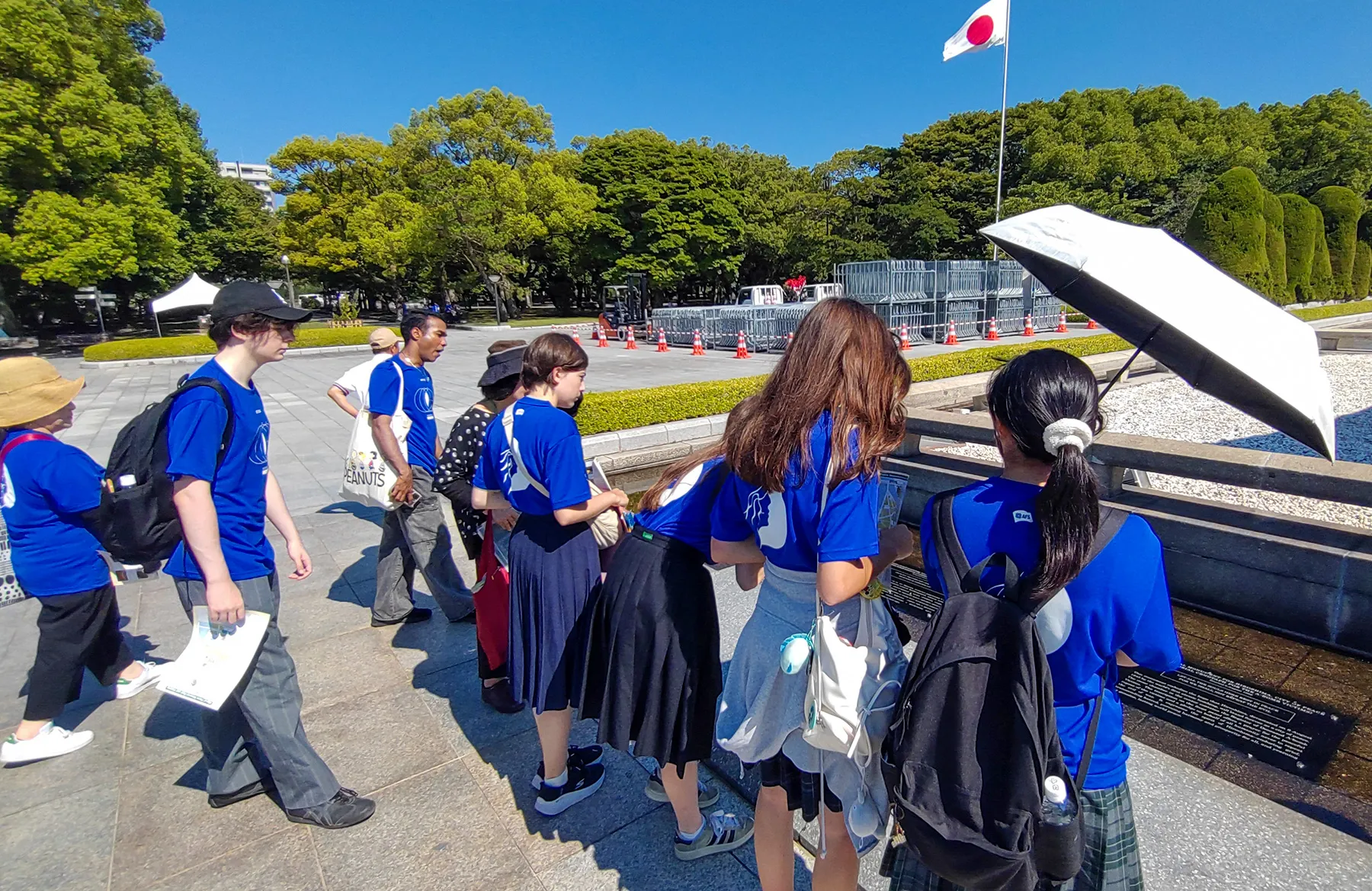
翌日は平和記念公園で碑巡りを行いました。
原爆死没者慰霊碑、韓国人原爆犠牲者慰霊碑、原爆供養塔、原爆の子の像──。それぞれの場所で黙祷を捧げ、歴史と真摯に向き合いました。
平和記念資料館では、原爆の被害だけでなく、その後も続いた放射線障害や差別、社会的課題について学びました。見学後のディスカッションでは、
「広島の歴史を知ることで、自分の国の現状も見つめ直せた」
「悲しい過去を知った今、行動しない理由はない」
といった意見が交わされ、通訳をしながら私自身も心を動かされました。
3日目:自分にできる平和活動を宣言
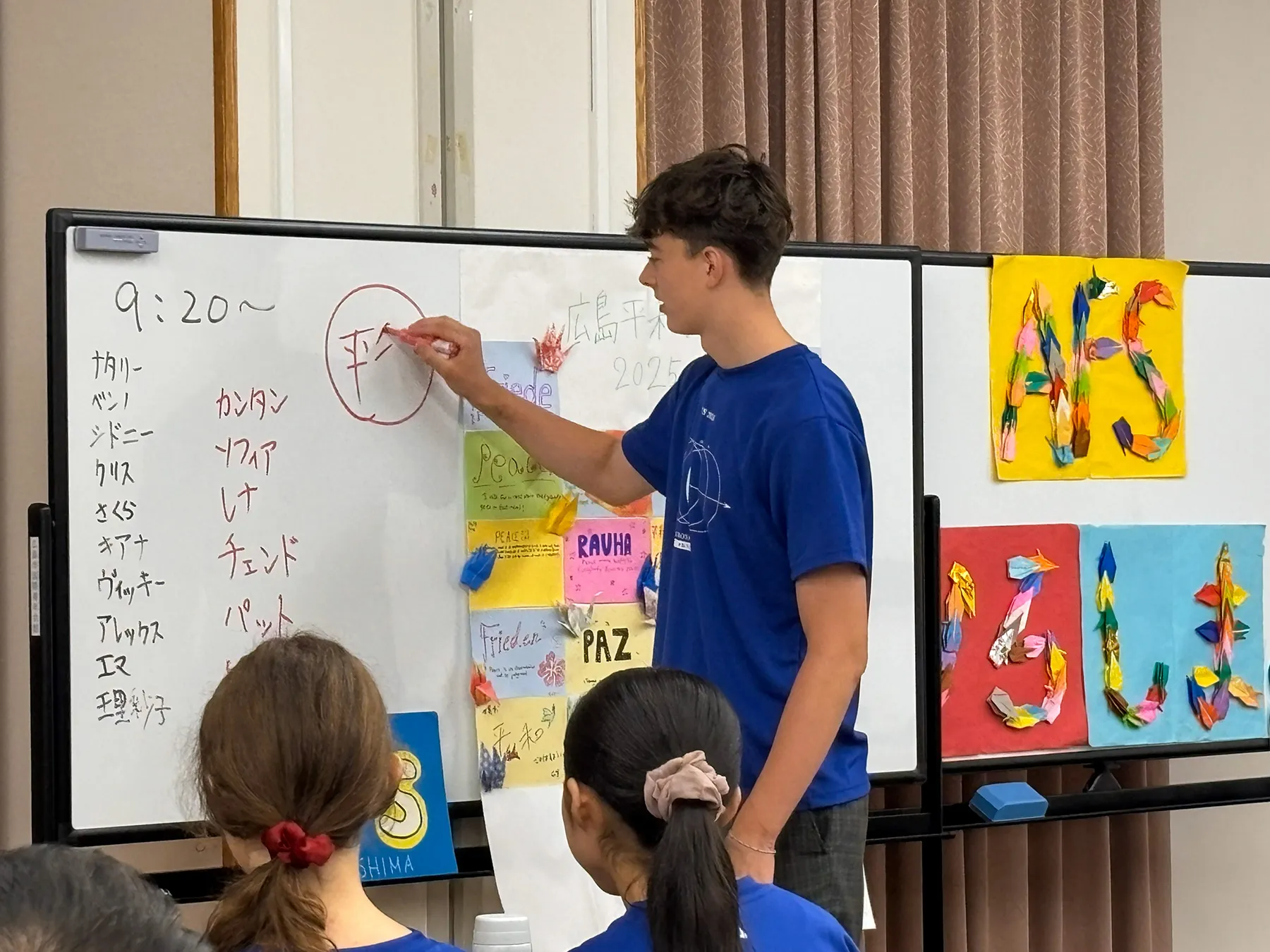
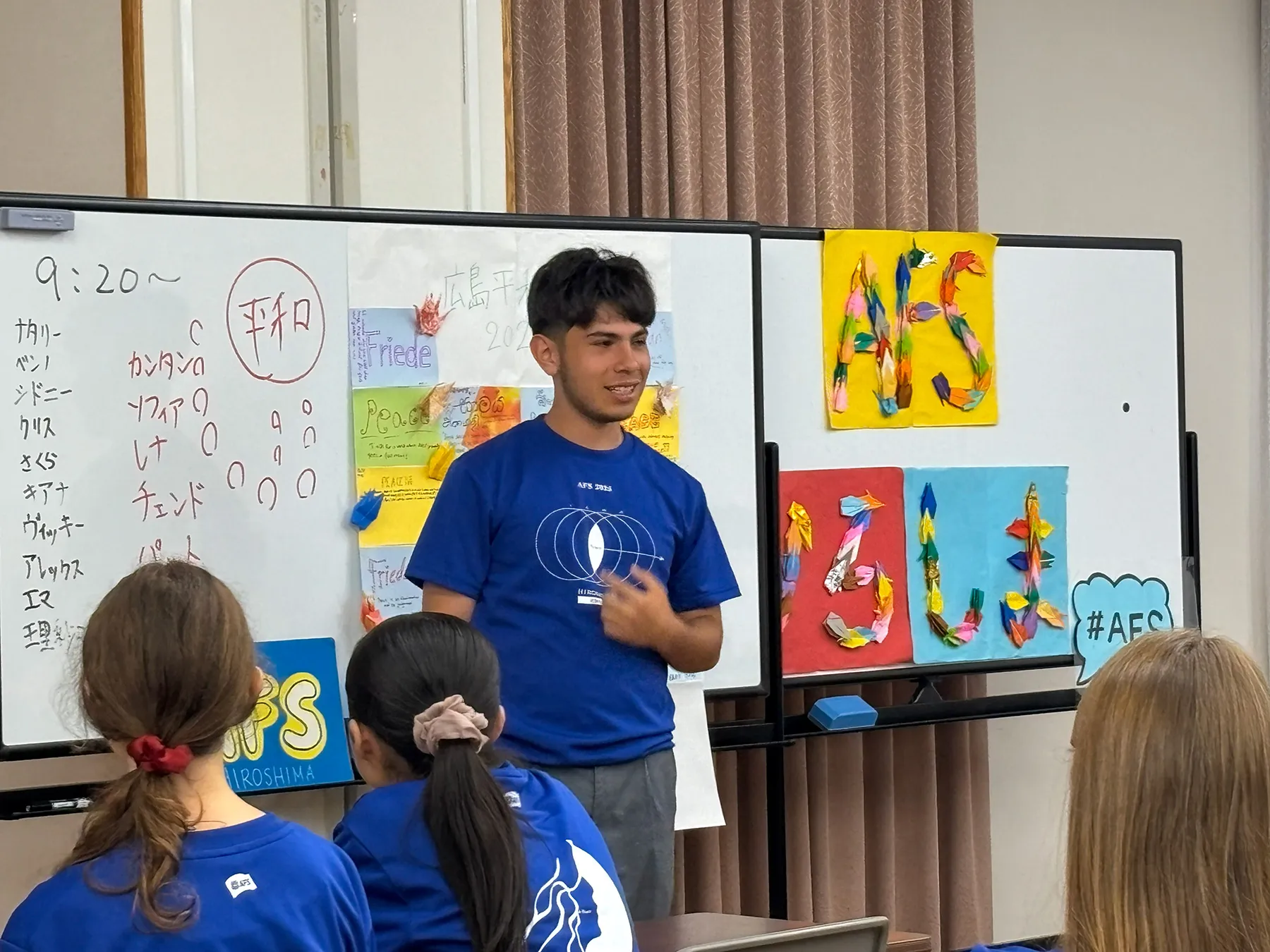
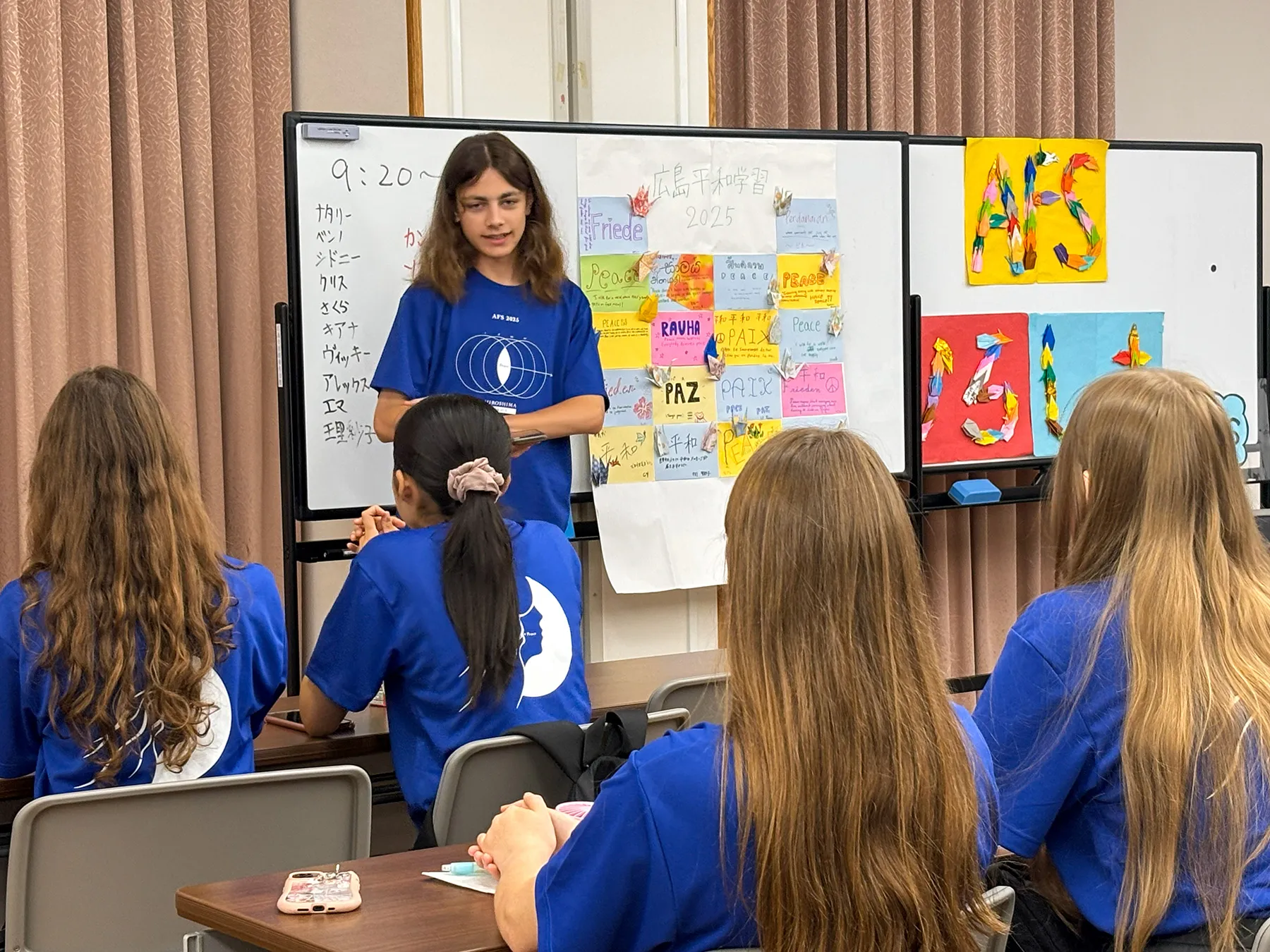
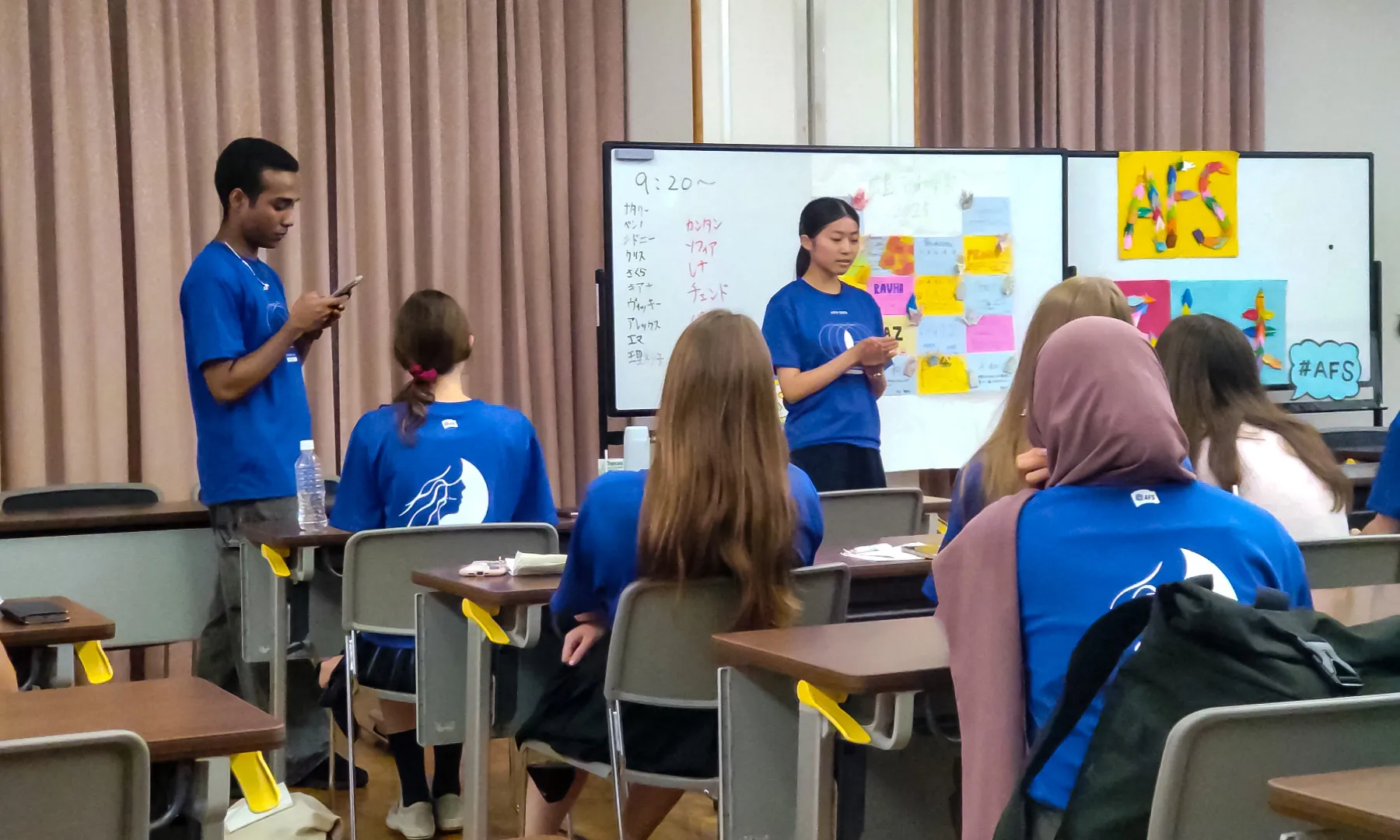
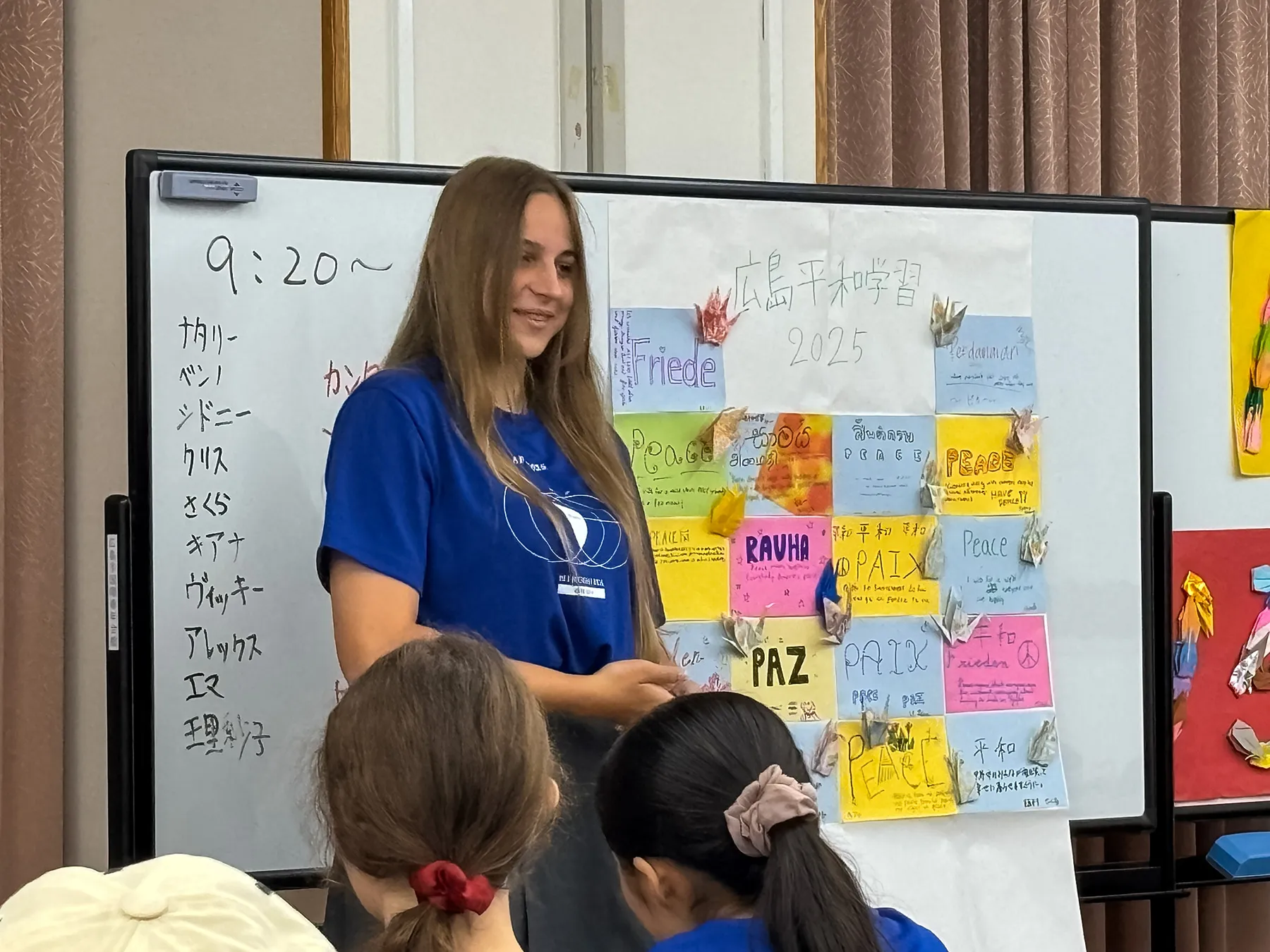
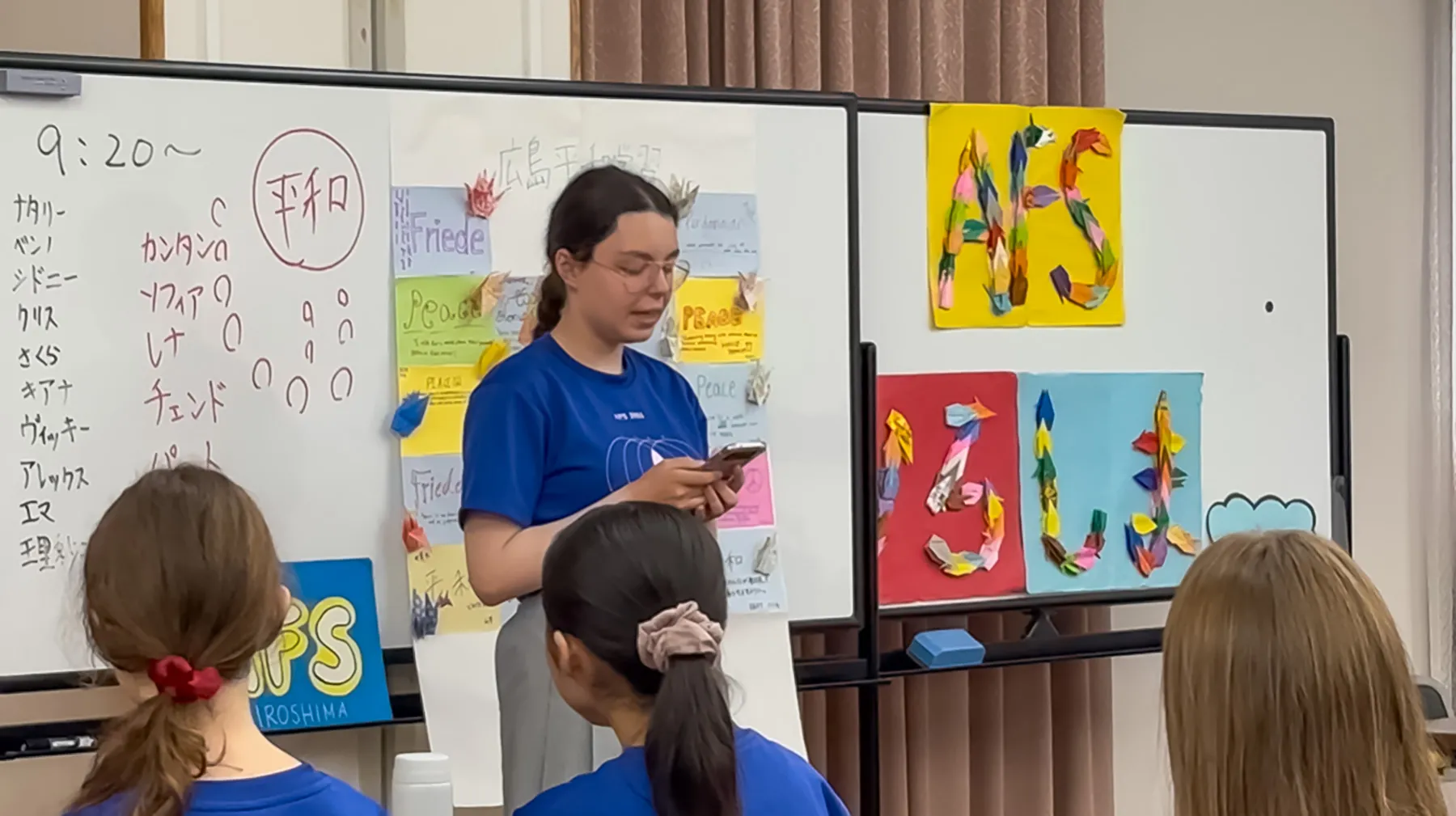
最終日には、参加者一人ひとりが「自分ができる平和活動」を発表しました。
SNSで体験を発信する、学校で広島の話を伝える、差別や偏見を見過ごさない──。小さな一歩でも、それが未来を変える力になると信じられる時間でした。
司会進行を務めながら、仲間たちの真剣な表情と力強い言葉を見届け、この学びの場に関われたことへの誇りを感じました。
AFSが掲げる平和への想い
AFSはこうした活動を通して、次の価値観を育んでいます。
「多様性に満ちた世界において、平和と相互理解の推進のため行動する責任ある地球市民を育てる」
「平和は、不正や不公正、偏狭な心によって常に脅かされる。だからこそ、人権と基本的自由が尊重される社会を目指す」
この理念を胸に、広島での学びを自分の暮らす地域や世界中に広げていくこと。それが今回の参加者全員の共通の決意です。
広島から世界へ
原爆の惨禍から立ち上がった広島の街は、今や平和を発信する象徴です。
通訳や司会進行を通じて、そのメッセージを直接世界の仲間に届けられたことは、私にとってかけがえのない経験でした。
この3日間で得た想いと学びを、必ず未来へつなげていきます。
一人ひとりの小さな行動が、やがて大きな平和の波になることを信じて。
執筆:Tharusha Dilshan (タルー)
(AFS大分中部支部/通訳・司会進行担当 HIROSHIMA平和学習2025)
Learning from That Day, Shaping the Future – HIROSHIMA Peace Learning 2025
From August 1 to 3, 2025, I participated in the “HIROSHIMA Peace Learning” program organized by the AFS Hiroshima Chapter.
As a staff member, I took on the roles of interpreter and partial MC during the three-day program. Together with AFS exchange students from more than ten countries, Japanese outbound students, and fellow staff members, we spent time in Hiroshima deeply reflecting on the questions: “What is peace?” and “What can I do for it?”
Day 1: A-bomb Testimony Conveyed Through Voice and Music
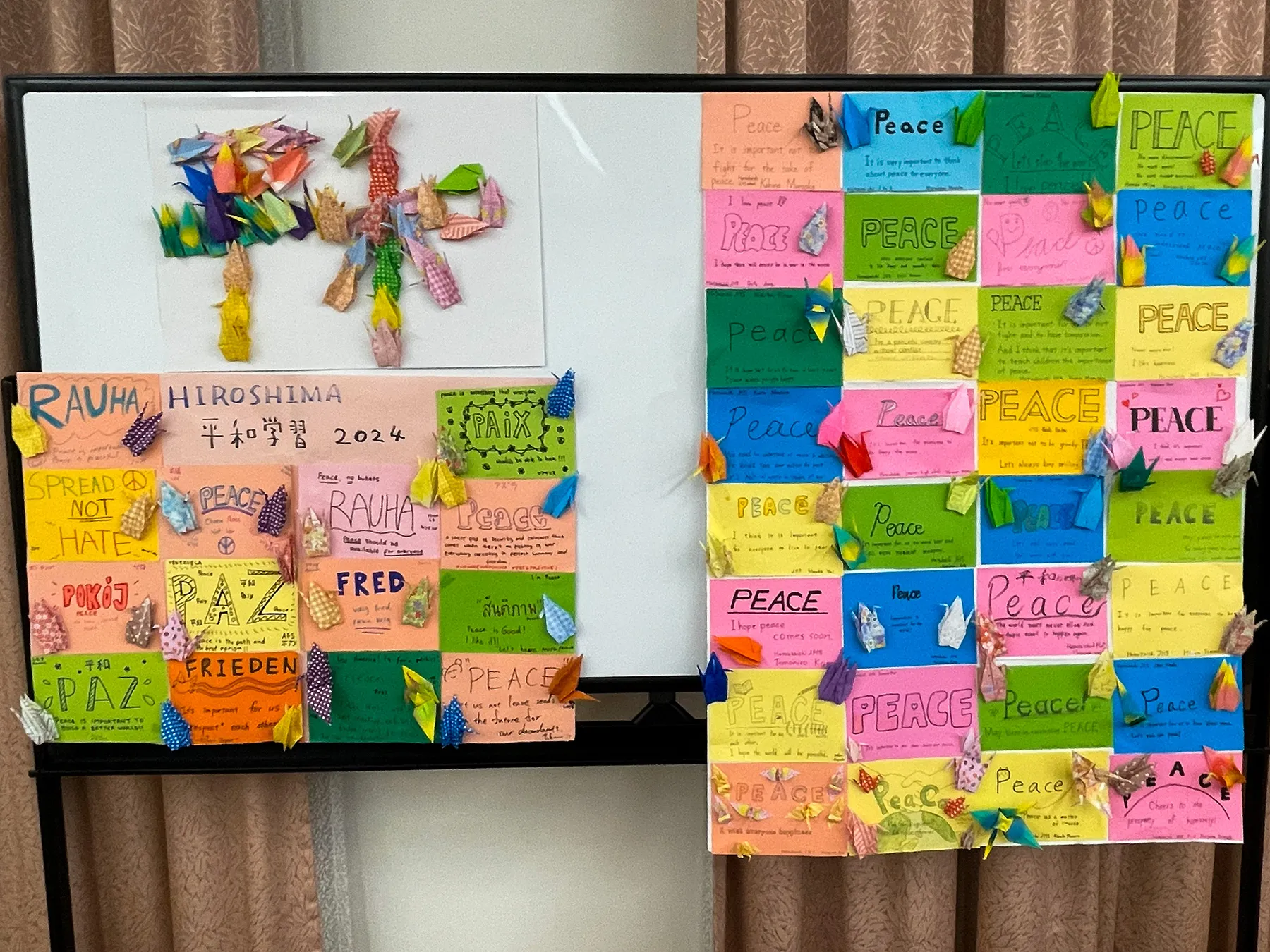
On the first day, we gathered at the Aster Plaza and began with folding paper cranes.
Each small piece of origami carried a prayer that will be taken back to each participant’s home country or region, spreading a new circle of peace.
Then came the testimony of Ms. Sadae Kasaoka, an A-bomb survivor.
At the age of 12, she was exposed to the atomic bomb at her home in Eba Town, 3.5 km from the hypocenter. She lost family and friends that day, and at 92 years old, she continues to share her vivid memories.
Her words, wrapped in the calm voice of reciter Ayako Katsura and the music of pianist Miwako Morioka, touched our hearts beyond words.
As the interpreter, I felt a responsibility beyond simply translating her words. I wanted to convey the emotions and atmosphere behind them — and that is the thought I carried as I held the microphone.
Exchange with Motomachi High School: Paintings That Tell the Memory of That Day
In the evening, we visited Motomachi High School to view “A-bomb paintings” created by students.
The paintings vividly depicted cities engulfed in flames and people desperately seeking help. The intensity was so powerful that it was hard to believe they were created by high school students of today.
During the exchange session, impressions and questions were exchanged in both Japanese and English, creating connections that transcended generations and nationalities.
Day 2: Learning from the Peace Memorial Park and Museum
The next day, we toured the Peace Memorial Park, visiting the Cenotaph for the A-bomb Victims, the Cenotaph for Korean Victims, the Atomic Bomb Memorial Mound, and the Children’s Peace Monument. At each site, we paused to offer silent prayers and faced history with sincerity.
At the Hiroshima Peace Memorial Museum, we learned not only about the devastation caused by the atomic bomb, but also about the long-term issues that followed — radiation sickness, discrimination, and social challenges.
During the post-visit discussion, comments such as:
“Learning about Hiroshima’s history made me re-examine the situation in my own country.”
“Now that I know about this tragic past, there’s no reason not to take action.”
As I interpreted these words, I too was deeply moved.
Day 3: Declaring the Peace Activities We Can Do Ourselves
On the final day, each participant presented “a peace activity I can do myself.”
From sharing their experiences on social media, to telling Hiroshima’s story at school, to not overlooking discrimination or prejudice — even small steps can become a force for changing the future.
As I helped facilitate the presentations, I felt pride in being part of this learning space, witnessing the determined expressions and powerful words of my fellow participants.
AFS’s Commitment to Peace
Through such activities, AFS fosters the following values:
“To develop responsible global citizens who act to promote peace and mutual understanding in a diverse world.”
“Peace is constantly threatened by injustice, inequity, and intolerance. That is why we strive for a society where human rights and fundamental freedoms are respected.”
Holding this philosophy close to our hearts, we aim to carry the lessons learned in Hiroshima back to our own communities and to the world. This was the shared commitment of every participant in this program.
From Hiroshima to the World
The city of Hiroshima, which rose from the devastation of the atomic bombing, is now a symbol of peace.
Being able to directly deliver that message to international friends through my work as an interpreter and MC was an invaluable experience for me.
I am determined to carry the thoughts and lessons from these three days into the future.
I believe that each person’s small actions will eventually become a great wave of peace.
Written by Tharusha Dilshan (Tharu)
(AFS Oita Chubu Chapter / Interpreter & MC, HIROSHIMA Peace Learning 2025)
この記事のカテゴリー: AFS活動レポート